Q: What's your name and position in the company?
A: Paul Brook, Marketing Director
Q: Describe your company in 5 words.
A: Website and software development
Q: What's your business philosophy?
A: At Derventio, we adopt a flexible approach and consider ourselves to be problem solvers. Whether it be a 'straight-forward' brochure website or an online application, our talented team of developers, designers, SEO and content specialists will suggest a digital solution that maximises the available budget.
Q: Describe your office environment.
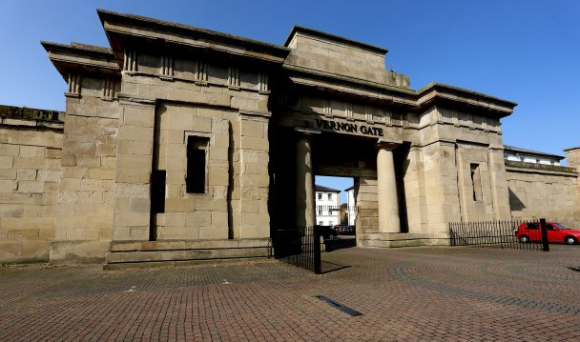
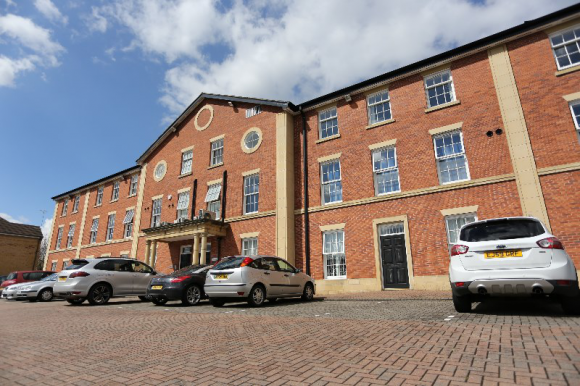
A: Modern offices in the Vernon Gate complex, close to Derby's City Centre. Car parking is available for staff and clients. The majority of the 26 staff work in an open plan environment, collected in working 'pods' depending on the function. Directors and senior managers have offices but adopt an 'always open' door policy, unless confidential meetings are required. An informal attitude prevails in which management encourage staff to participate and make suggestions for improving our service offering.
Q: Describe how your team interact and work together.
A: Although there is a traditional line management structure and systems in place to handle work flow, the open plan office, open door policy and collaborative approach employed by management, all staff feel empowered to contribute to the day to day running of the organisation.
Q: What makes you different from other web design companies?
A: Many web design companies will have entered the industry from a graphic design perspective. Because we are a large development team, we have been able to develop systems for multi-national companies and the output of those turnkey projects can now be used to benefit companies with more modest budgets. We also have staff that have earned their stripes in PR and marketing, so can not only advise, but provide photographic, video, copywriting and SEO services to ensure a website looks good, generates enquiries and converts them.
Q: How do you get the majority of your business?
A: The bulk of our projects arise by repeat business and word of mouth. We also work with other agencies as an outsourced supplier for projects that are beyond the skills of their in-house designers and front-end developers.
Q: Describe how you manage projects from the initial client contact to completion and handover.
A: Project delivery is often driven by the resources, budgets and management structures of the client. The dynamics may be different if our customer is using the software for themselves or a customer of their own. We are able to adopt waterfall, agile or hybrid methodologies. Ideally we would undertake a scoping survey and agree a technical and functional spec. Once the budget has been finalised a project plan will be drawn up. Milestones will be established and 'sign-off' obtained at key stages. An electronic 'work audit' system is employed to track project progress and ensure deliverables are on spec.
Q: What do you think is the most crucial element of creating a good client relationship?
A: Both parties should feel empowered to speak freely and expectations of both parties should be clear, transparent and tracked. We believe 'failing to plan, is planning to fail'. Should 'issues' arise, they should be handled calmly and professionally and a roadmap/solution agreed. Issues are less likely to arise if the brief and specification are comprehensive from the outset. Robust communication systems are also paramount.
Q: How do you manage demanding clients?
A: If expectations are set out from the inception, they are less likely to be issues. No client would see themselves as a 'red flag' client; so any unreasonable demands should be addressed robustly, but in a supportive manner. It is our duty as project managers to assist clients if their own planning systems are lacking.
Q: If a client was trying to decide between a shortlist of web design companies, how would you recommend they go about selecting the right one for them?
A: After doing the initial research, whether that be searching the internet or seeking referrals, there is no substitute for meeting in person and outlining the expectations of both parties. If there is not a clear 'fit', it is best to seek an alternative partner. If there are minor disagreements in expectations (usually relating to budget), then these should be discussed openly, to see if an alternative approach can be adopted.
Q: Where do you see your company in 10 years time?
A: Derventio prides itself in its client retention ratio. We tend to work with a small number of large organisations and are keen to grow the business adopting the same approach to collaboration. It may be a cliche, but the 'small enough to care, big enough to cope' mentality has served us well so far and helped deliver year on year growth, even in these difficult times. We hope to be in bigger offices, with more staff, but still enjoying the working day as much as we do now.
Q: Where do you see the web design industry in the future?
A: The web will continue to be increasingly mobile and interactive. No 'one size fits all' approach will work. Now that 'responsive' web design is becoming the norm, 'adaptive' web design (different content as well as different layout for different devices) will grow in popularity as user expectations increase. Although data transfer speeds will inhibit the proliferation of HD content in the next few years, superfast broadband and 4G will allow web designers to offer an even richer and personalised experience for users.
Q: What computers do you have use in your offices, PCs or Macs?
A: PC
Q: How was your company name chosen?
A: Derventio is the Roman name for an area of Derby that had a fort at the side of the River Derwent.
Q: If you were to give your clients one tip on how to get the most from their website what would it be?
A: Use high quality photography that resonates with your key audiences.

 Latest Work